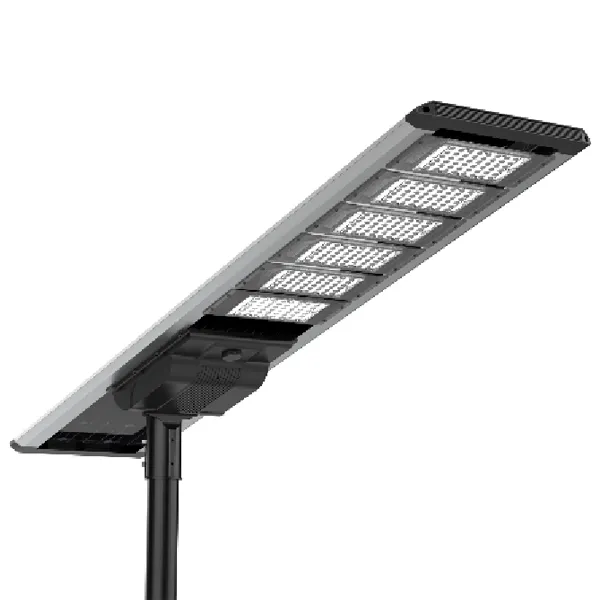
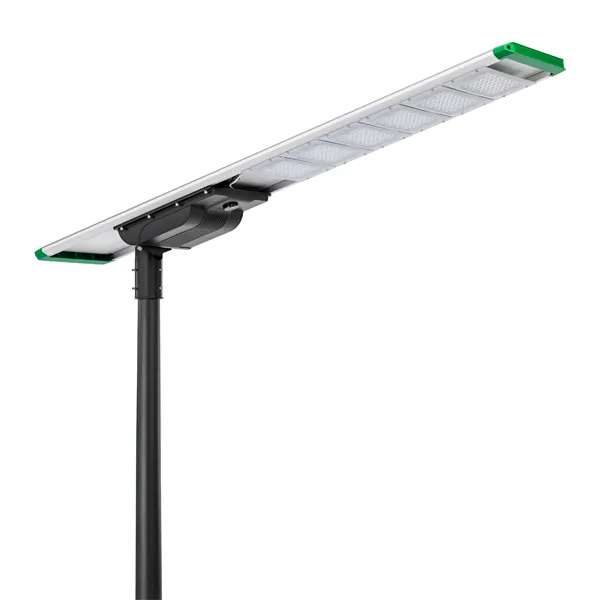
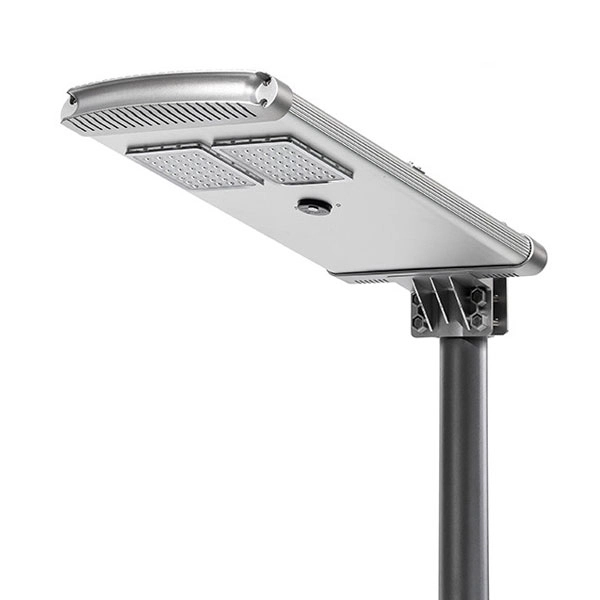
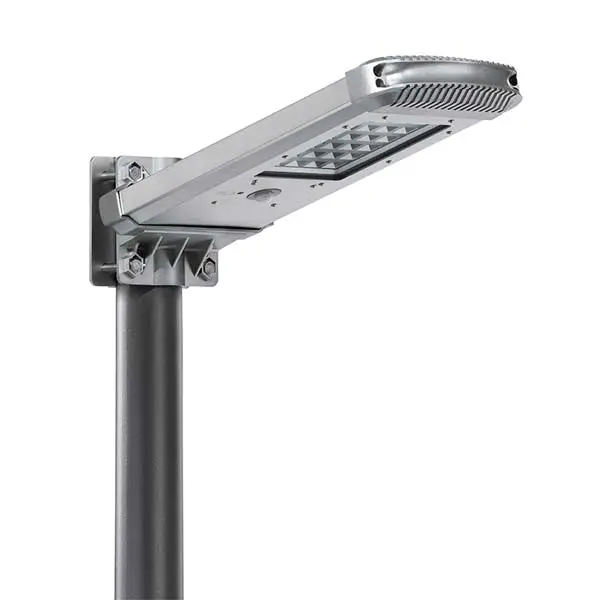
Southeast Asia is well suited to solar street lighting because many markets receive abundant sunlight throughout the year. However, strong annual solar resources do not mean every day provides the same charging conditions. Tropical climates can also experience seasonal monsoons, heavy rainfall, cloud cover, high temperatures, and several consecutive days of reduced solar generation.
For road contractors and project buyers, the challenge is therefore not simply choosing the largest solar panel or battery. A reliable system should balance normal daily energy consumption with sufficient reserve for temporary periods of poor weather, without unnecessarily oversizing the entire system.
Markets such as Southeast Asia often provide favorable conditions for solar-powered road lighting. Strong sunlight during much of the year allows the solar panel to recharge the battery efficiently, making off-grid lighting practical for urban roads, rural areas, industrial parks, residential streets, and infrastructure projects.
However, tropical climates also create several design considerations:
Seasonal monsoon rainfall
Several consecutive cloudy days
High daytime temperatures
High humidity
Sudden heavy rain
Dust and airborne contamination
Different solar conditions between dry and wet seasons
For a China all in two solar street light, this means system design should not be based only on annual average sunshine.
The more useful question is whether the battery and solar panel can maintain the required lighting schedule during periods of reduced charging and then recover efficiently when normal sunlight returns.
This is especially important for projects where street lighting needs to operate throughout the year without relying on grid electricity.
Battery and solar-panel sizing should begin with the actual amount of energy the street light consumes each night.
A simple calculation is:
Nightly Energy Consumption = LED Power × Operating Hours
However, most modern solar street lights do not operate at full rated power continuously for twelve hours.
A typical programmed lighting schedule may include:
100% brightness during the first few hours
Reduced power after traffic decreases
Low-power operation late at night
Increased brightness when motion is detected
For example, assume a 60W street light operates at:
100% for 3 hours
80% for 2 hours
25% for 7 hours
The approximate nightly energy consumption becomes:
60W × 3h + 48W × 2h + 15W × 7h = 381Wh
This is significantly lower than assuming:
60W × 12h = 720Wh
The difference demonstrates why buyers should obtain the actual controller schedule before comparing system configurations.
For an OEM solar street light project, LED wattage alone cannot tell buyers how much battery capacity or solar-panel power is actually required.
In a high-sunlight market, battery sizing should provide sufficient backup during consecutive cloudy or rainy days while avoiding unnecessary excess capacity.
A simplified calculation is:
Required Stored Energy = Nightly Energy Consumption × Required Backup Days
If a system consumes approximately 400Wh each night and the project requires three nights of backup:
400Wh × 3 = 1,200Wh
In practice, the nominal battery capacity may need to be higher because not all stored energy should necessarily be used.
Other factors include:
Depth of discharge
Battery-management settings
Controller losses
High-temperature conditions
Battery aging
Required safety reserve
Battery specifications should also be compared in watt-hours rather than Ah alone.
The calculation is:
Battery Energy (Wh) = Battery Voltage × Battery Capacity (Ah)
For example:
12.8V × 66Ah = 844.8Wh
This gives buyers a clearer picture of how much nominal energy the battery actually stores.
For tropical markets with abundant annual solar resources, simply increasing battery size is not always the best solution. If the solar panel cannot recharge the larger battery efficiently after a monsoon period, the additional battery capacity may provide less practical benefit than expected.
The battery and solar panel therefore need to be designed as one energy system.
A solar panel does more than supply enough energy for one normal night's operation.
After several cloudy days, it also needs to restore energy that has been taken from the battery.
A simplified panel-sizing approach is:
Required Solar Power = Daily Energy Demand ÷ Peak Sun Hours ÷ System Efficiency
If a street light consumes approximately 500Wh per night and receives five effective peak-sun hours:
Using an estimated system efficiency factor of 75%:
500 ÷ 5 ÷ 0.75 ≈ 133W
Under normal sunny conditions, a panel around this range may theoretically replace approximately one day's energy consumption.
But consider what happens after several monsoon days.
If the battery develops a 1,000Wh energy deficit and the project requires the system to recover within two clear days, an additional:
1,000Wh ÷ 2 = 500Wh per day
needs to be generated.
The panel therefore needs enough charging margin to handle:
Normal daily consumption + battery recovery
This recovery requirement is particularly relevant in Southeast Asian markets because strong sunshine often returns after periods of heavy rainfall.
An automatic solar street light with programmed dimming or motion control can also reduce the amount of energy that needs to be replenished each day, improving system resilience without relying only on larger hardware.
Annual solar irradiation can make a project location appear extremely favorable, but it may hide large seasonal differences.
For solar street lighting, buyers should consider the solar resource during the most challenging part of the year.
Project information should ideally include:
Country and city
Project coordinates
Rainy-season period
Approximate peak sun hours during that season
Required lighting hours
Required backup days
Pole height
Road width
Target illuminance
Acceptable dimming strategy
This allows the supplier to design the system according to real project conditions rather than using one standard configuration for every tropical market.
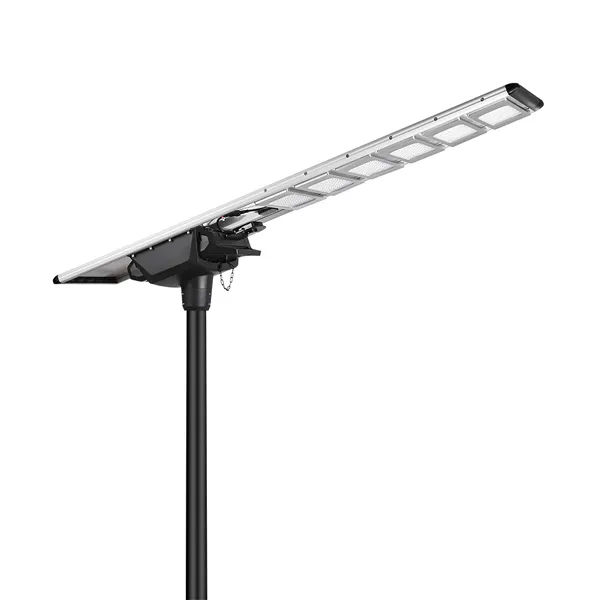
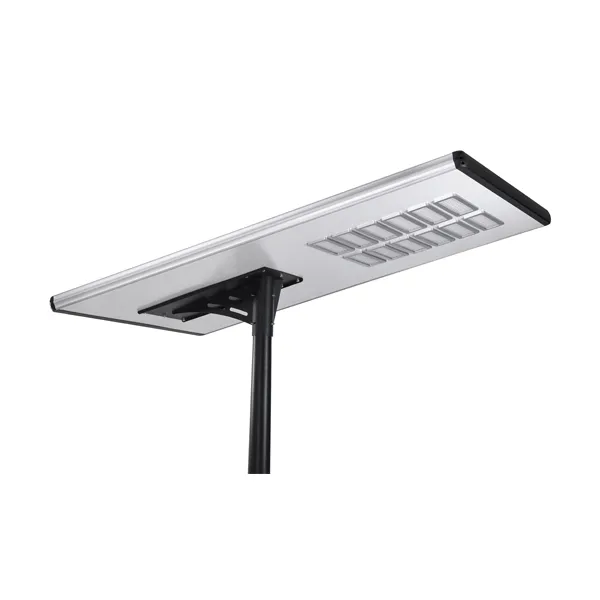
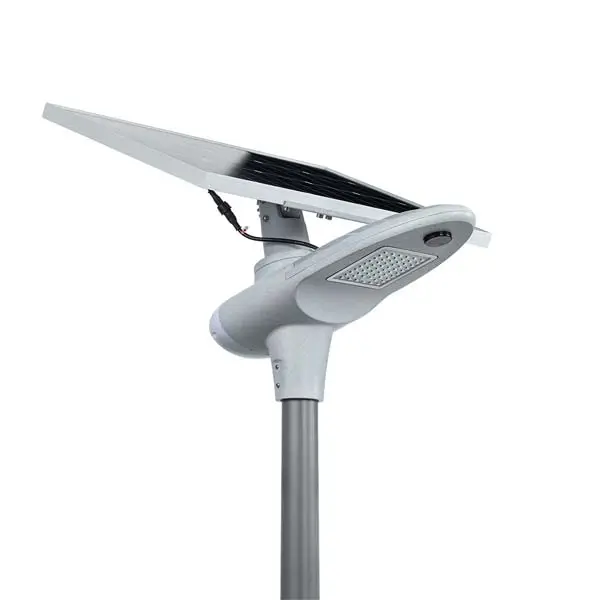
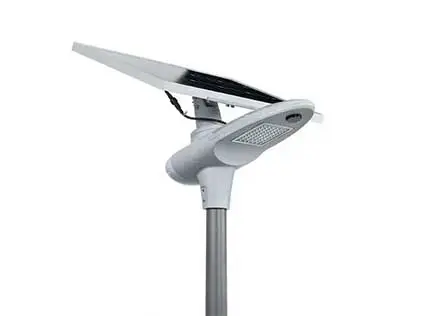
All-in-One architecture also offers an advantage in this situation because the solar panel is integrated with the luminaire.
Its direction and mounting angle can be adjusted more independently to improve solar collection.
This can be particularly useful where road orientation, nearby buildings, trees, or installation constraints prevent the luminaire itself from facing the most suitable direction.
The most useful solar street light specification is not a single number. Buyers should compare LED output, battery capacity, panel size, lighting schedule, mounting height, and backup duration together.
JKCSOLAR's PAD All-in-One series provides an example of how these components change with different lighting outputs:
| Model Example | LED Output | LiFePO4 Battery | Solar Panel | Lighting Program |
|---|---|---|---|---|
| PAD-60W | 10,200 lm | 12.8V 54Ah | 18V 80W | At night, 12hours motion sensor control (cuztomize is available) |
| PAD-80W | 13,600 lm | 12.8V 66Ah | 18V 100W | |
| PAD-100W | 17,000 lm | 12.8V 84Ah | 18V 130W |
The published configurations also specify approximately 12 hours of daily lighting and backup capability for several cloudy or rainy days under the corresponding operating mode.
For a tropical project, buyers should still ask how those figures were calculated.
Useful questions include:
Is the backup period based on the standard dimming program?
Does the controller automatically reduce brightness when battery capacity falls?
How quickly can the battery recover after several cloudy days?
What solar conditions were assumed?
Can the lighting program be customized for the project?
Can the panel or battery configuration be adjusted for local monsoon conditions?
For example, an 80W all in two solar street light should not be selected only because a tender asks for “80W.” Its battery, panel, installation height, road width, operating profile, and local solar resources should also match the actual project.
This approach helps buyers avoid both under-designed systems and unnecessary oversizing.
Yes. Many Southeast Asian markets have strong annual solar resources, making solar-powered road lighting suitable for a wide range of off-grid and municipal applications. Seasonal monsoon conditions should still be considered during battery and solar-panel sizing.
Not necessarily. The battery should be sized according to nightly energy demand and the required backup period. In high-sunlight markets, excessive battery capacity may not provide sufficient additional value if the solar panel is not sized to recharge it efficiently.
The correct number depends on the project location, local weather patterns, lighting requirements, and acceptable dimming strategy. Buyers should define the required backup period during the RFQ stage.
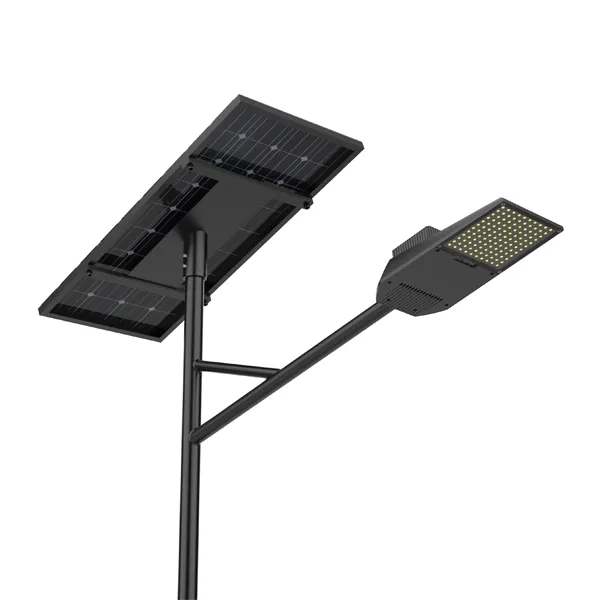
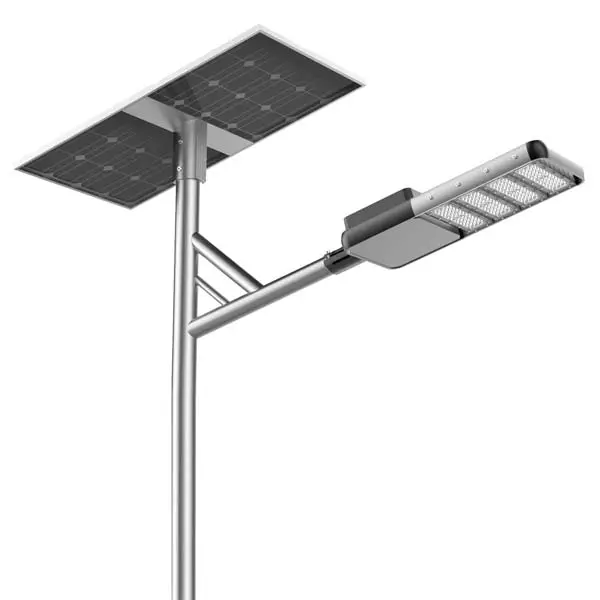
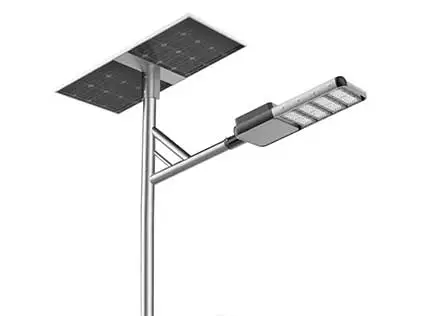
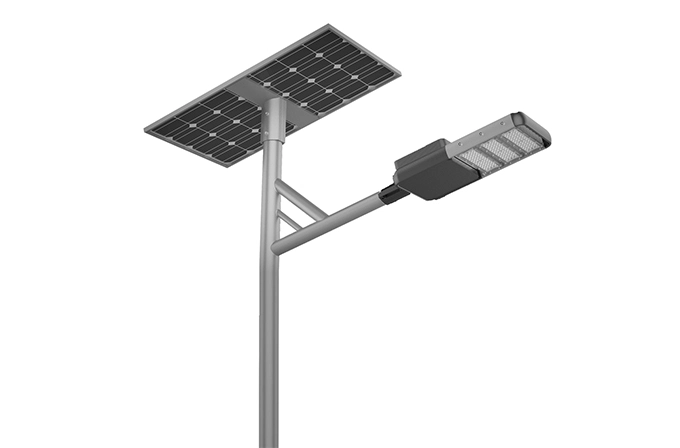
Because the solar panel is installed separately from the luminaire, its direction and angle can be adjusted more flexibly. This can help optimize solar collection according to the installation location.
Not for projects where monsoon-season performance is important. It is better to evaluate solar conditions during the lower-sunlight period of the year rather than relying only on annual averages.
Yes. A properly designed lighting schedule can significantly reduce nightly energy consumption. Time-controlled dimming and motion sensing can therefore help balance lighting performance with battery and solar-panel requirements.
For Southeast Asian and other high-sunlight tropical markets, solar street light design should take advantage of strong annual solar resources while still accounting for temporary reductions in charging during monsoon periods.
The most effective approach is to calculate actual nightly consumption, define a realistic backup period, evaluate wet-season solar conditions, and make sure the solar panel can restore battery energy efficiently after cloudy weather. By balancing these factors together, project buyers can achieve reliable year-round lighting without simply increasing battery or panel size beyond what the application requires.
 EN
EN
 ja
ja  fr
fr  de
de  es
es  pt
pt  ar
ar  tr
tr  tl
tl  ms
ms  id
id